
Soil Stability That Protects Long-Term Investment
Erosion Control in Mobile and surrounding areas for properties facing runoff and soil loss following clearing or construction
Mobile's average annual rainfall exceeds sixty inches, concentrated in intense summer thunderstorms and tropical weather events that generate runoff velocities capable of displacing exposed soil within hours of clearing or grading activities. LA Land Management LLC installs erosion control measures that stabilize soil, redirect water flow, and prevent sediment migration on residential properties, commercial sites, and development projects where vegetation removal or construction has eliminated natural ground cover. Properties on slopes, near waterways, or with clay soils face the highest erosion risk because these conditions either accelerate runoff or reduce infiltration, causing water to concentrate and carve channels through unprotected surfaces.
Erosion control addresses the period between ground disturbance and establishment of permanent vegetation or hardscape surfaces, protecting soil from storm events that would otherwise remove topsoil, undermine foundations, or deposit sediment onto adjacent properties and drainage systems. Proactive management costs less than repairing erosion damage after it occurs, particularly when sediment reaches storm drains or damages neighboring land.
Schedule an erosion control consultation to evaluate site conditions and discuss soil protection strategies appropriate for your terrain and project timeline.
What Proper Erosion Management Requires
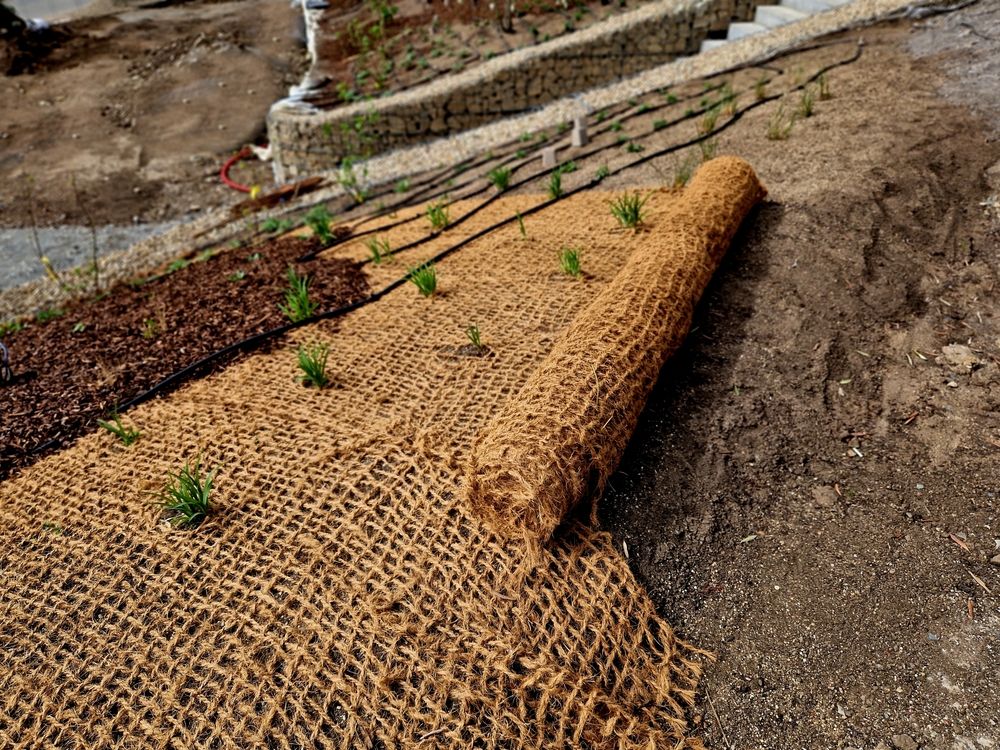
Effective erosion control combines physical barriers that slow runoff velocity, ground cover that shields soil from raindrop impact, and drainage modifications that redirect concentrated flow away from vulnerable areas. Methods include installing silt fencing along downslope boundaries to trap sediment before it leaves the property, applying erosion control blankets or straw mulch to newly graded surfaces, and constructing temporary berms or swales that divert water toward stable discharge points rather than allowing sheet flow across exposed soil.
After erosion control measures are in place, you notice that storm events no longer carve visible channels or gullies through disturbed areas, sediment remains on-site instead of washing onto roads or neighboring properties, and the soil surface maintains consistent elevation without depressions or washouts. The measures also prevent sediment from clogging drainage structures or covering vegetation in low-lying areas, which preserves site function and reduces maintenance costs during project completion.
Site-specific recommendations depend on slope angle, soil composition, expected rainfall intensity, and duration until permanent stabilization occurs through landscaping or pavement installation. Some properties require only perimeter silt fencing and mulch application, while others need comprehensive grading adjustments, check dams in drainage swales, and staged implementation that protects different areas as construction progresses across the site.
What Property Owners Usually Ask
Clients managing recently cleared land, construction sites, or properties with visible erosion damage ask about timing, material selection, and maintenance requirements for erosion control installations.
LA Land Management LLC designs and installs erosion control solutions that maintain soil stability and protect property integrity across Mobile-area residential, commercial, and development sites. Contact us to arrange a site evaluation and receive customized recommendations based on your terrain, soil type, and project schedule.
What site conditions indicate erosion control is necessary?
Visible signs include exposed soil on slopes, water pooling or channeling during rain, sediment deposits at property edges, and loss of topsoil revealing lighter-colored subsoil or clay layers beneath the original surface.
How quickly should erosion control be installed after clearing?
Installation should occur within days of vegetation removal or grading, before the first significant rainfall, because a single intense storm on unprotected soil can cause more erosion than months of light rain on vegetated ground.
What materials work best for erosion control in Mobile's climate?
Selection depends on project duration and site conditions, with biodegradable blankets used for areas awaiting permanent vegetation, synthetic materials for long-term construction projects, and mulch or hydroseed for flat or gently sloping areas where wind and rain impact are less severe.
How does erosion control protect surrounding properties?
Measures trap sediment on-site before it washes onto adjacent land, enters storm drains, or accumulates in roadside ditches, preventing drainage blockages and liability issues associated with sediment leaving your property during storm events.
What maintenance do erosion control installations require?
Inspections after each significant rainfall identify damaged sections, displaced materials, or areas where concentrated flow has bypassed controls, with repairs addressing failures before the next storm rather than waiting until project completion.