
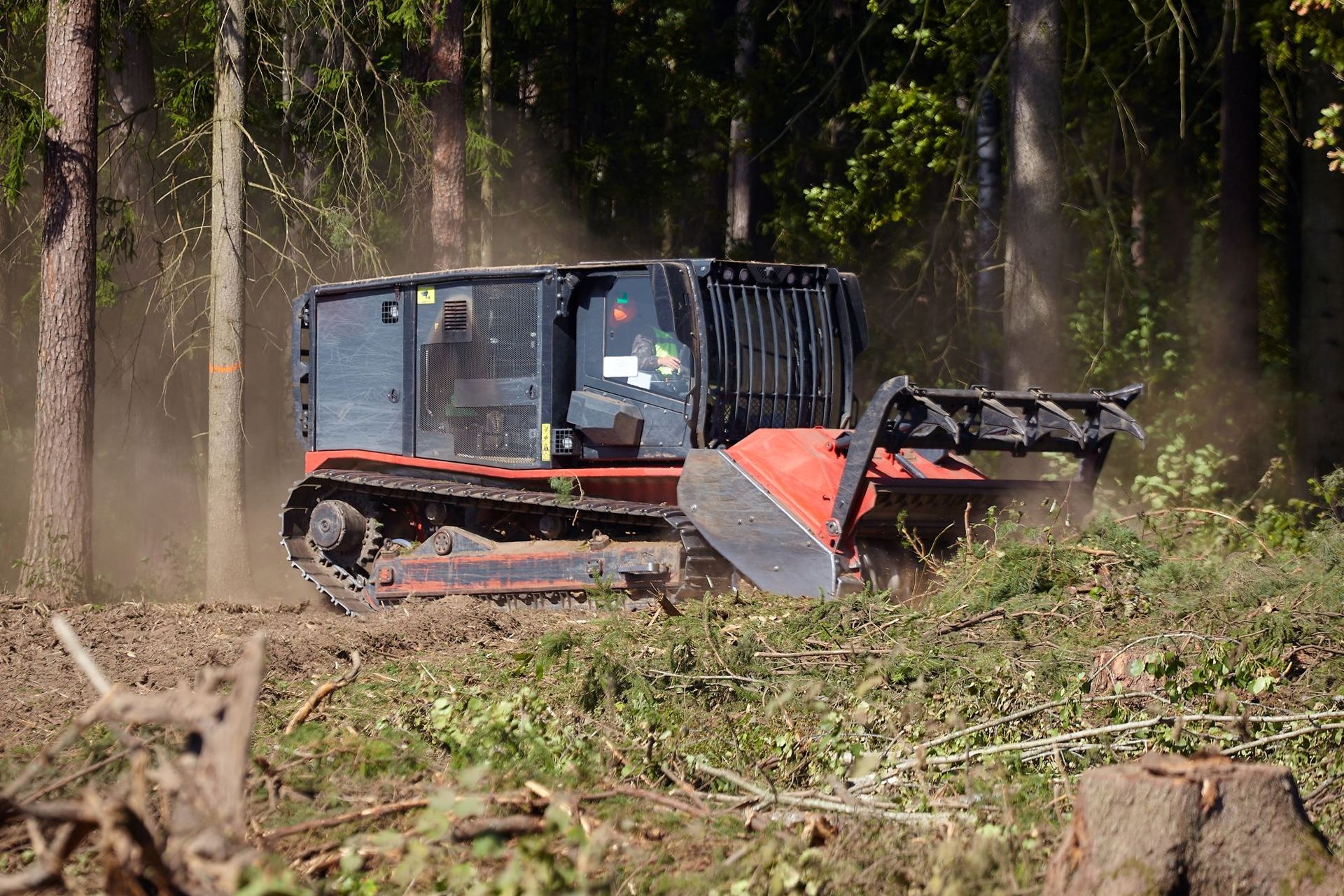
Vegetation Removed While Improving Soil Conditions
Forestry Mulching in Mobile and surrounding areas for residential, commercial, agricultural, and recreational properties requiring vegetation removal with minimal ground disturbance
Traditional clearing strips land down to bare soil, removing vegetation along with the organic layer that controls erosion and supports regrowth of desirable plants. Forestry mulching grinds trees, brush, and undergrowth in place, processing vegetation into mulch that spreads across the cleared area and returns organic material to the soil surface. LA Land Management LLC uses forestry mulching across Mobile, Bay Minette, Spanish Fort, or a neighboring community on properties where improved access and visibility matter but where maintaining ground cover reduces erosion risk, preserves soil structure, and creates a finished appearance without the stark, exposed look of full clearing. The method works for homeowners opening wooded lots, landowners managing invasive vegetation, and commercial developers preparing sites where environmental permits require minimized disturbance.
Mulching removes underbrush, small to medium trees, and invasive species while leaving the root network intact, which stabilizes soil and prevents washouts common on steep or sandy ground. Properties become accessible and usable without requiring hauling, burning, or piling debris.
Contact us to discuss forestry mulching solutions and evaluate whether this method suits your property conditions and intended use.
How Mulching Can Improve Property Appearance and Usability
Forestry mulching uses a rotating drum with cutting teeth that grinds vegetation into chips and spreads the material across the ground in one continuous process. The method handles brush, saplings, and trees up to a certain diameter efficiently compared to cutting, piling, and hauling, particularly on properties where access limits how much equipment can operate simultaneously or where disposal options are costly.
After mulching, you gain clear sight lines and open travel routes across the property, with a layer of organic mulch covering the ground rather than exposed dirt. The mulch layer slows water runoff, reduces erosion on slopes, suppresses weed growth temporarily, and decomposes over time to improve soil quality. Appearance shifts from overgrown and tangled to park-like and maintained, which increases property value and makes land more attractive for recreational use, wildlife management, or future development planning.
Mulching works across residential properties, agricultural land needing pasture reclamation, commercial sites with environmental constraints, and recreational tracts where hunting or trail access requires visibility but habitat structure must remain partially intact. The process is more efficient than manual clearing when acreage is large, vegetation density is moderate, and hauling costs would otherwise dominate project expense.
Common Questions About This Service
Property owners evaluating mulching want to understand how it differs from traditional clearing, what results look like, and when the method makes sense for their specific situation.
LA Land Management LLC applies forestry mulching where the method delivers better outcomes than traditional clearing, based on your property conditions and goals. Call (251) 533-4001 to arrange a property visit and determine whether mulching fits your vegetation management needs.
How does forestry mulching compare to traditional land clearing?
Mulching grinds vegetation in place and leaves organic material on the ground, while traditional clearing removes vegetation entirely and often exposes bare soil, which increases erosion risk and requires more equipment mobilization and disposal logistics.
What size vegetation can forestry mulching handle?
Most mulching equipment processes brush, small trees, and saplings up to six to eight inches in diameter efficiently, with larger trees requiring cutting and removal through traditional methods before mulching addresses understory growth.
How long does mulched material take to decompose?
Decomposition depends on climate, with Mobile's warm, humid conditions accelerating breakdown so mulch begins incorporating into soil within one to two years, though visible chips remain on the surface for several months.
What properties benefit most from mulching?
Properties on slopes, sandy soils prone to erosion, areas with environmental restrictions, and rural land needing invasive species control see the greatest benefit from mulching's combination of clearing and ground cover preservation.
Can mulching remove invasive vegetation effectively?
Mulching cuts invasive plants to the ground and covers the area with mulch that suppresses regrowth temporarily, but complete control often requires follow-up treatments since root systems remain intact and some species resprout aggressively.